
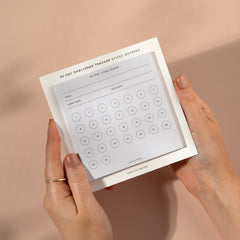
There’s something quietly reassuring about putting pen to paper.
Almost everything lives behind a screen, our calendars, conversations, shopping lists, work, photographs and even our downtime, many of us are beginning to crave something a little more tangible.
A paper planner. A favourite pen. A handwritten list sitting beside your morning coffee.
Analogue planning is making a comeback, but perhaps it never really went away. Instead, our relationship with it is changing. We’re no longer turning to paper simply because we need somewhere to keep our appointments. We’re choosing it because it offers something our digital tools often can’t: a moment to slow down, think clearly and be present.

The quiet return to paper
Digital planning is incredibly convenient. We can move meetings in seconds, set reminders, share calendars and keep our entire lives synced across devices.
But convenience doesn’t always create clarity.

When the same device holds our calendar, emails, messages, social media and endless notifications, even checking a simple to-do list can quickly become another distraction.
Paper creates a little distance from all of that.
Opening a planner gives you one place to focus on what matters right now. No notifications appearing at the top of the page. No tabs waiting to be opened. No temptation to check something else.
Just you, the page and what needs your attention.
Perhaps that simplicity is exactly why analogue planning feels so refreshing again.
We’re craving fewer screens, not more
For many of us, screens have become almost impossible to avoid.
We work on laptops, communicate through our phones and relax by watching another screen at the end of the day. It makes sense that we’re beginning to look for small, intentional ways to step away from them.
Analogue planning offers one of those moments.
Writing your plans down in the morning can become a small ritual before opening your laptop. Reviewing your week on a Sunday afternoon can help you feel prepared without scrolling through another app. Even jotting down three priorities on a notepad can bring a surprising amount of calm to a busy day.
Create a better balance between digital convenience and analogue calm.
Writing things down feels different
There is something about handwriting that asks us to slow down.
Typing is quick. We can add, delete, rearrange and move on almost instantly. Writing by hand is more deliberate.

You have to decide what deserves space on the page.
That small pause can help turn a long stream of thoughts into something more manageable. Instead of carrying everything around mentally, appointments, ideas, reminders, deadlines and the little things you don’t want to forget, you can place them somewhere visible.
For visual thinkers especially, seeing everything laid out on paper can make a busy week feel much easier to understand.
Sometimes clarity begins with simply getting things out of your head and onto the page.
Planning is becoming a ritual, not just a productivity tool
For a long time, productivity was associated with doing more.
More tasks. More goals. More habits. More optimisation.
But our idea of productivity is slowly becoming softer and more considered. Being productive doesn’t have to mean filling every available hour.
Sometimes it means knowing what matters, creating space for it and allowing the rest to wait.
This is where a paper planner can become more than somewhere to record appointments.
It can hold your priorities alongside your personal plans. Your goals alongside your everyday routines. The practical things that need doing alongside the things you want to remember.
A quiet coffee with a friend deserves a place on the page just as much as a meeting does.
Planning, at its best, isn’t about squeezing more into your life. It’s about becoming more intentional with the life you already have.
There’s comfort in something tangible
We spend so much of our lives interacting with things we can’t physically hold.
Cloud storage. Digital calendars. Notes apps. Online folders.
 Paper feels different.
There’s pleasure in turning a page, crossing something off a list or opening a planner that has gradually become filled with your handwriting. Over time, it becomes a quiet record of ordinary life: busy weeks, fresh starts, ideas you almost forgot about and plans that eventually became memories.
There is an imperfection to analogue planning that makes it feel personal.
A crossed-out appointment stays crossed out. A hurried note might sit beside a carefully written list. Your pages don’t need to look perfect to be useful.
They simply need to work for you.
Analogue and digital planning can work together
Choosing a paper planner doesn’t mean deleting your digital calendar.
In fact, the most useful planning system is often a combination of both.
A digital calendar can take care of reminders, shared appointments and things that may change. Your paper planner can become the place where you step back and see the bigger picture.
You might keep appointments digitally, then sit down at the beginning of each week and transfer what matters into your planner. From there, you can add priorities, personal plans, notes and anything else you want to give your attention to.
Technology handles the reminders.
Paper gives you space to think.
They don’t have to compete.
A slower way to stay organised
Perhaps the return to analogue planning is part of something bigger.
We’re becoming more conscious of where our attention goes. We’re questioning whether every part of our lives needs another app, another notification or another digital solution.
Sometimes the simplest tools are still the ones that work beautifully.
A notebook for an idea.
A sticky note for something you don’t want to forget.

A planner for seeing your week clearly.
A pen and a blank page when your mind feels a little too full.
These things are wonderfully ordinary, and perhaps that is their appeal.
Creating space for what matters
Analogue planning isn’t really about rejecting the digital world.
It’s about knowing when to step away from it.
To close the tabs.
Put your phone aside.
Pick up a pen.
And give your thoughts somewhere to land.
Sometimes, a blank page is all the space we need.
Leave a comment